Jagdishpur Katarni Rice: The Rice That's Slowly Disappearing
From Farm to Table: The Natureship Process of Purity and Tradition
At Natureship, we believe that true nourishment comes not just from what we eat but from how it is made. Our journey is one of authenticity, craftsmanship, and a deep-rooted commitment to nature. Every grain of rice, every pinch of masala, and every spoonful of sattu carries the essence of mindful living, the wisdom of our ancestors, and the hard work of rural communities. Our processes are designed to preserve purity, empower local artisans, and bring you food in its healthiest, most natural form.
Sourcing the Desi Grains – From Farms to Your Table
Our journey begins in the lush villages of Bihar and Jharkhand, where time-honored agricultural practices still thrive. We source locally grown and chemical-free desi produce directly from women farmers, ensuring purity at every step. These farmers cultivate their crops using traditional methods, without harmful pesticides or synthetic fertilizers, preserving the land and ensuring the highest quality grains.
By working directly with these communities, we not only procure the finest raw ingredients but also create opportunities for rural livelihoods. Our mission is to empower women-led groups and small farmers, offering them fair wages and a sustainable means of income. Every product you purchase contributes to strengthening rural economies and reducing urban migration.
Traditional Cleaning & Sun Drying – Nature’s Way of Purification
Our dedication to traditional cleaning and sun-drying is an integral part of ensuring that our products maintain their purity and nutritional value. Unlike industrial methods that rely on chemicals and artificial preservatives, we stick to 100% natural processing techniques.
- Hand Cleaning: We hand-sort and clean our grains meticulously, removing any impurities without the use of machines or chemicals. This process ensures that only the finest grains make it to your plate.
- Sun-Drying: Instead of using artificial heat, we sun-dry our grains in open-air settings. This natural drying process helps retain the nutrients and natural flavors, ensuring longevity without the need for preservatives.
Hand Roasting – Small Batches for Maximum Flavor
We believe in slow food, which is why we hand-roast our produce in small batches. This process enhances the aroma, flavor, and nutritional content of our grains and flours.
- Hand-roasting releases the natural oils of the grains, enhancing their fragrance and making them easier to digest.
- The controlled roasting process prevents nutrient loss while improving taste.
- Small batch roasting ensures consistency and prevents the overheating that often occurs in large-scale production.
The result? A distinct, wholesome taste that reminds you of home-cooked, authentic meals prepared with love and care.
Stone Grinding by Hand – The Traditional Chakki Method
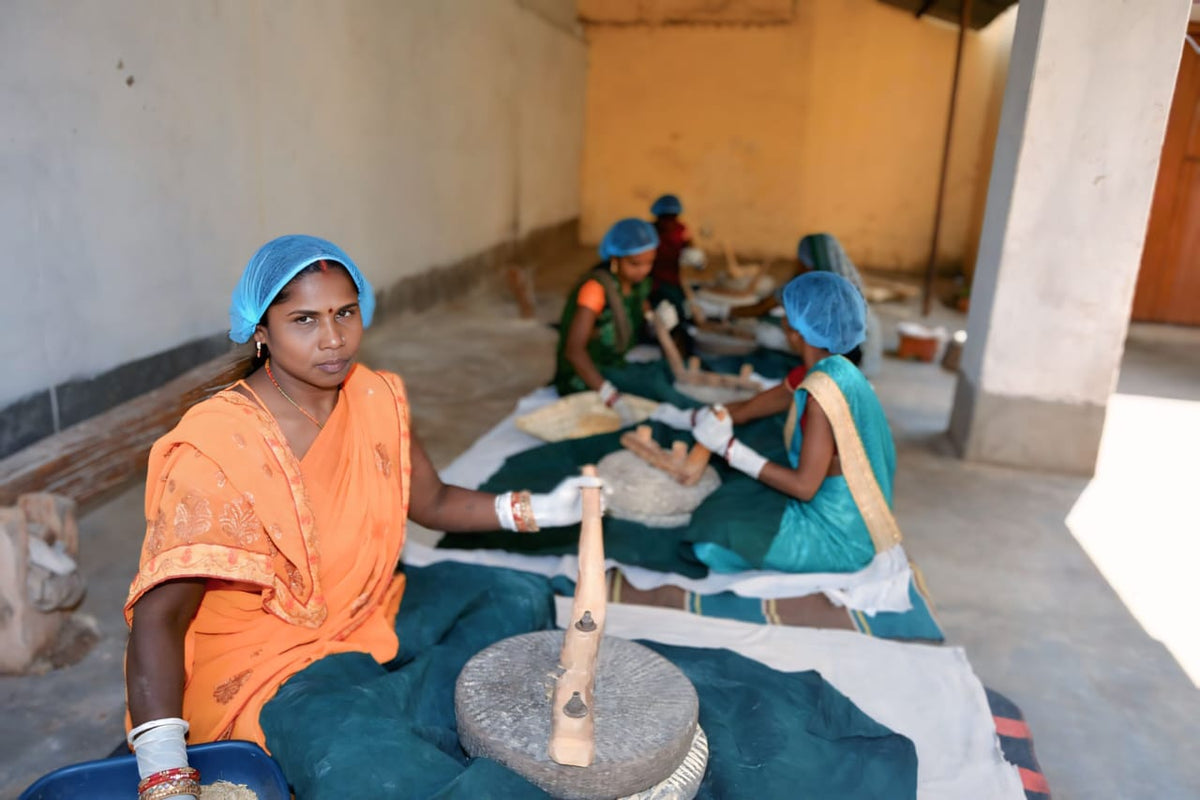
The final step in our process is stone-grinding by hand using the age-old chakki method. Unlike high-speed industrial mills that generate excess heat and strip grains of their essential nutrients, our manual grinding process preserves the natural goodness of every grain.
- Slow Grinding: Only 45-55 rotations are done per hour, allowing for gradual crushing of the grains while retaining essential vitamins and minerals.
- Nutrient Retention: The slow process ensures that all nutrients, including insoluble dietary fibers and Vitamin B (folate), remain intact.
- Rich in Natural Oils: Unlike commercial milling, which removes germ and bran, our grinding process retains these crucial components, making the final product highly nutritious.
For example, Chana Sattu, when stone-ground and hand-roasted, delivers additional nutrients like insoluble dietary fibers and essential Vitamin B. This vitamin plays a key role in red and white blood cell production, carbohydrate metabolism, and brain function.
Chemical-Free Processing – Purity in Every Bite
At Natureship, we ensure that no chemicals, preservatives, or artificial additives touch our products. From sourcing to packaging, we follow stringent quality control measures to maintain the highest standards of purity and freshness.
- No Pesticides: Our farmers use natural fertilizers and crop rotation techniques instead of chemical pesticides.
- No Artificial Additives: We do not add artificial flavors, colors, or preservatives.
- Natural Storage Methods: We store our products using traditional methods such as sun-drying and airtight packaging to maintain freshness without synthetic chemicals.